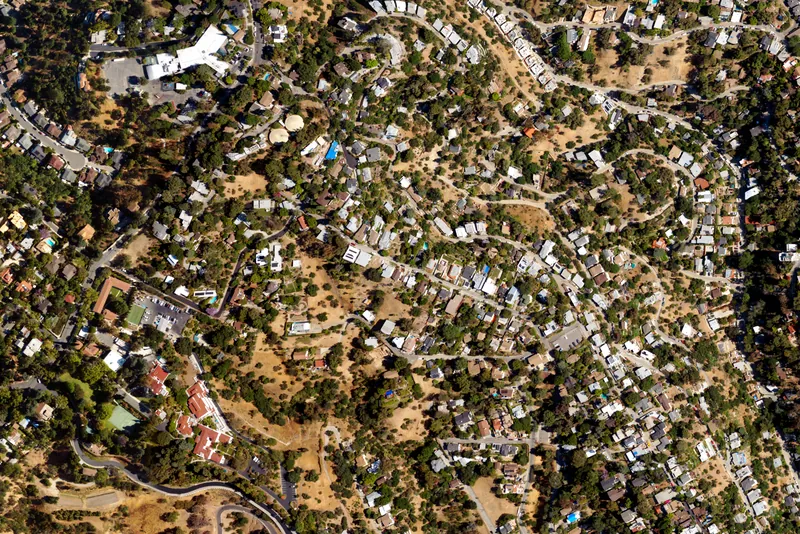
In much of Los Angeles County, the roof is a fire safety question, not just a weather one. The LA County Fire Department says it directly: "Your roof is the most vulnerable part of your home because it can easily catch fire from windblown embers."
This hub explains the maps, codes and building practices that apply. LA Roof Guide is an information site only. We do not do roof work.
The maps changed in 2025
Fire Hazard Severity Zones are the maps that decide where wildfire building rules apply. The LA County Fire Department explains that CAL FIRE "is required by law to map areas of significant fire hazards based on fuels, terrain, weather, and other relevant factors."
On March 24, 2025, the state issued new recommended maps for land under local responsibility in LA County. They sort land into moderate, high and very high zones. Two points stand out:
- The LAFD says "a local agency shall not decrease the level of the FHSZ recommended by the State." It may raise a level or add areas.
- The LAFD and the county both expected more parcels to be affected. The LAFD said the changes "may influence building and vegetation management requirements."
Read more on our page about fire hazard severity zones in LA, including how to check an address.
A new code took effect in 2026
California now has a standalone wildfire building code. CALBO, the state's building officials group, describes the 2025 California Wildland-Urban Interface Code, Title 24, Part 7, as "effective January 1, 2026." It "consolidates WUI provisions previously located in the California Building Code, California Residential Code, and California Fire Code into one coordinated document." CALBO lists key topics as fire zone applicability, building construction rules, defensible space and the "Zone 0 ember-resistant perimeter."
LA County's 2026 construction notes say the same move happened locally: "Provisions for Materials and Construction Methods for Exterior Wildfire Exposure are now located in Part 7, California Wildland-Urban Interface Code."
What the rules ask of a roof
LA County's notes apply to new buildings and to "additions, alterations or repairs made to existing buildings" in a Fire Hazard Severity Zone or WUI Fire Area. For roofs, they require:
- A roof covering of "Class A fire classification when tested in accordance with ASTM E108 or UL790."
- Fire stopping or a cap sheet where the roof shape leaves a gap between the covering and the deck.
- Noncombustible gutters and downspouts with a way to keep debris out.
- Vents that resist embers and flame.
In the City of Los Angeles, the LADBS express reroof permit states that "Class A roof covering is required within Very High Fire Hazard Severity Zone (VHFHSZ)."
The details are on our Class A roofs, vents and gutters page.
Upkeep that fire officials stress
The LA County Fire Department's home hardening advice for roofs includes:
- "Build your roof or re-roof with fire-resistant materials that include composition, metal, or tile."
- "Block any spaces between roof decking and covering to prevent ember intrusion."
- "Clear pine needles, leaves, and other debris from your roof and gutters."
- "Cut any tree branches within 5 feet of your roof."
- "Screen or enclose rain gutters to prevent accumulation of plant debris."
It also warns that "homes with wood shake or shingle roofs are at a higher risk of being destroyed during a wildfire."
Rebuilding after the 2025 fires
After the 2025 Eaton and Palisades fires, LA County has a faster path for "like-for-like" rebuilds in unincorporated areas such as Altadena. These are structures of "the same size, in the same location, and for the same purpose" as before.
The key point for roofs: the county says like-for-like structures "do not need to comply with current Zoning Code requirements. However, they will need to comply with current Building, Fire, and Health and Safety Code requirements." So a rebuilt roof still has to meet today's building and fire codes.
On fees, the county's rebuild FAQ says the Board of Supervisors voted on June 17, 2025 to waive and refund fees for qualifying owners rebuilding single-family homes in unincorporated areas after the Eaton and Palisades fires. To qualify, the owner "must have both owned and lived in the property being rebuilt prior to January 7, 2025."
The county lists separate recovery sites for the City of Los Angeles (recovery.lacity.gov), Pasadena, Malibu and Sierra Madre.
Altadena and the Eaton fire area
Altadena is an unincorporated community, so LA County Public Works handles its permits, not a city. The county publishes its permit cases as open data (EPIC-LA), and that data shows the scale of the work.
Rebuild cases. As of the county's November 2026 data update, 3,862 Altadena parcels had at least one permit or plan case tagged "Eaton Fire (01-2025)." On 267 of those parcels, a case was marked "Construction Completed." A parcel can have several cases at different stages, so these are counts of parcels with cases, not of finished homes.
Reroof permits. Separate from full rebuilds, we counted county permits for ZIP 91001 whose description says "reroof," "re-roof" or "re roof." By year of issue:
| Year | Reroof permits, ZIP 91001 |
|---|---|
| 2021 | 207 |
| 2022 | 432 |
| 2023 | 449 |
| 2024 | 353 |
| 2025 | 482 |
| 2026 (to Oct.) | 127 |
That is 2,050 in all, more than any other ZIP in the county and City of LA data we reviewed. The 2025 count was the highest of the six years. The data does not say why. Burned homes rebuilt from the ground up get new building permits, which this count does not include.
Housing and climate. Census estimates (ACS 2024 5-year) give Altadena a median year built of 1946. That is older than the City of Los Angeles as a whole (1965) and Long Beach (1959); see our city guides. About 77% of occupied homes are owner-occupied. The Energy Commission lists ZIP 91001 in Building Climate Zone 9, where the state cool roof rule covers steep-slope reroofs that replace more than half the roof. See cool roofs in California.
For an Altadena roof, the fire rules on this page and the county's like-for-like rebuild rules above both matter. Check your parcel's fire hazard zone with the state map viewer.
Insurance and fire zones
Fire zone status can also affect home insurance. Our insurance in fire zones page covers what the state insurance regulator says.
In this hub
- Fire hazard severity zones in LA: what the 2025 maps are and how to check an address.
- Class A roofs, vents and gutters: the roof rules in fire zones, line by line.
This page is general information, not legal, engineering or building code advice. Rules differ by city; check with your local building department and fire department.